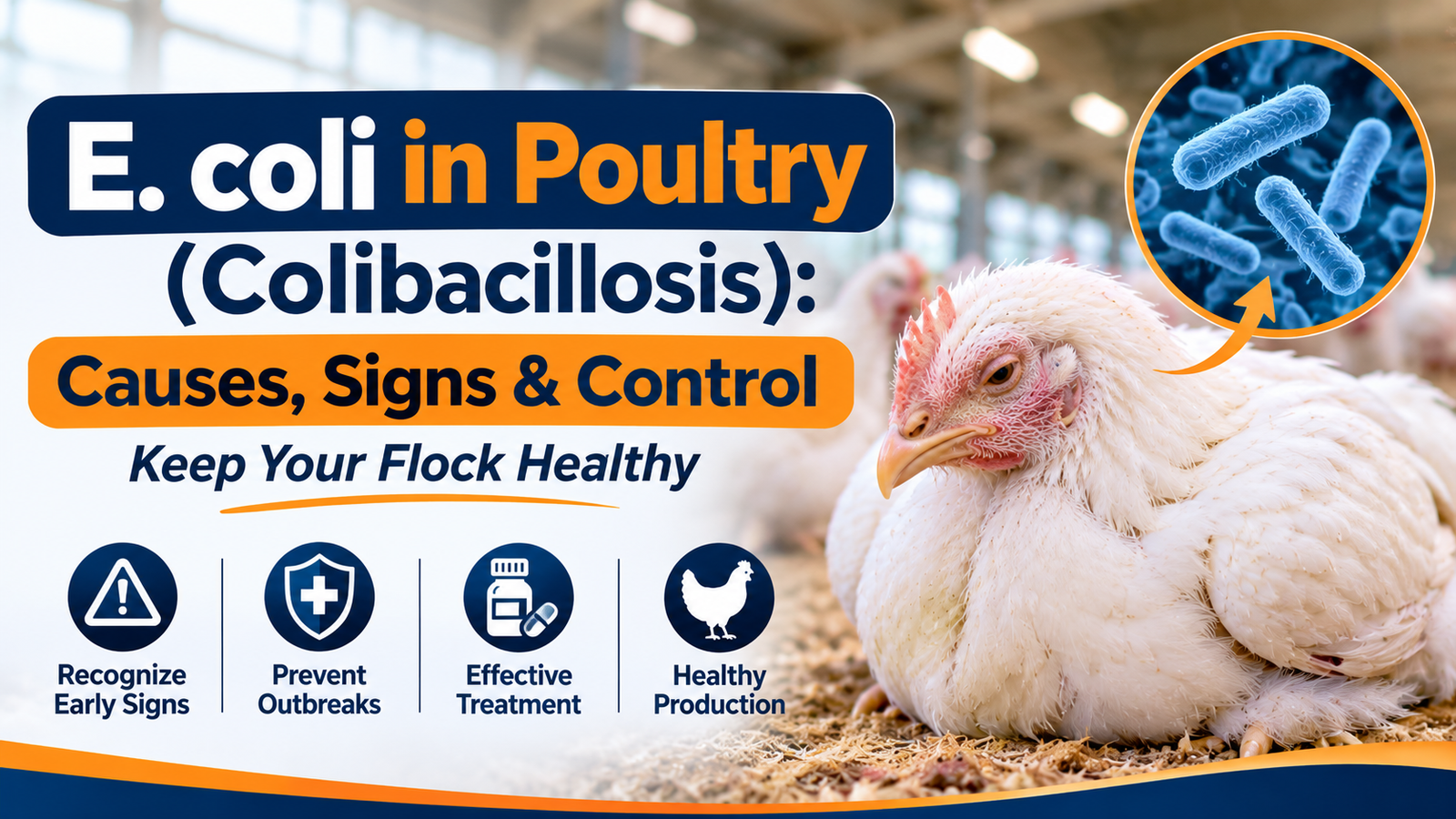
Colibacillosis, the disease caused by E. coli bacteria, is one of the biggest causes of death and condemned carcasses in poultry worldwide. In Pakistan it often follows on the heels of CRD in winter. Understanding what triggers it is the key to controlling it.
What is colibacillosis?
- colilives naturally in every bird’s gut and in the shed environment. Most strains are harmless. Disease happens when a harmful strain gets into the body through damaged airways, the navel of a young chick, or contaminated water.
It rarely strikes alone. Colibacillosis usually follows something that weakens the bird first, such as CRD, a viral infection, ammonia damage or stress.
Common forms of the disease
- Navel and yolk sac infectionin chicks during the first week, often traced back to hatchery hygiene
- Respiratory colibacillosis, with infection of the air sacs, heart lining and liver, usually after CRD
- Septicaemia, a blood infection that causes sudden deaths
- Egg peritonitisin layers and breeders
Signs to watch for
- Dull, sleepy birds with ruffled feathers
- Breathing difficulty, often alongside CRD signs
- Diarrhoea
- Increased mortality in chicks during the first week
- Poor growth and uneven flocks
- At post-mortem: white, cheesy layers over the heart, liver and air sacs
Prevention
- Control CRD and ammonia.Healthy airways keep E. coli out. See our guide to CRD in poultry in winter.
- Clean your water.Water lines are a major source of E. coli. Chlorinate water and flush lines regularly.
- Buy chicks from a hygienic hatcheryto avoid navel infections.
- Keep litter dry and avoid overcrowding.
- Clean and disinfect thoroughly between flocks.
Treatment
- coli is treated with antibiotics, but resistance is common. A sensitivity testfrom a diagnostic lab tells your vet which antibiotic will actually work on your farm, which saves money and protects future treatments.
Symans products used against colibacillosis include:
- Enrocoli: enrofloxacin, colistin and bromhexine, for colibacillosis and CRD together
- Flucol: flumequine and colistin, for colibacillosis, salmonellosis and enteritis
- Doxtin: doxycycline and colistin, for colibacillosis, enteritis and mycoplasma
- Colisym: colistin, for E. coli and salmonella infections
Colistin is an important antibiotic for human medicine too, so it should only be used on a vet’s prescription, never for growth promotion. Follow the label dose and observe withdrawal periods for meat and eggs.
The bottom line
- coli takes advantage of weak birds. Clean water, good air and strong CRD control prevent most cases. When treatment is needed, test first and treat on your vet’s advice.
Browse the full Symans poultry range or contact our team.