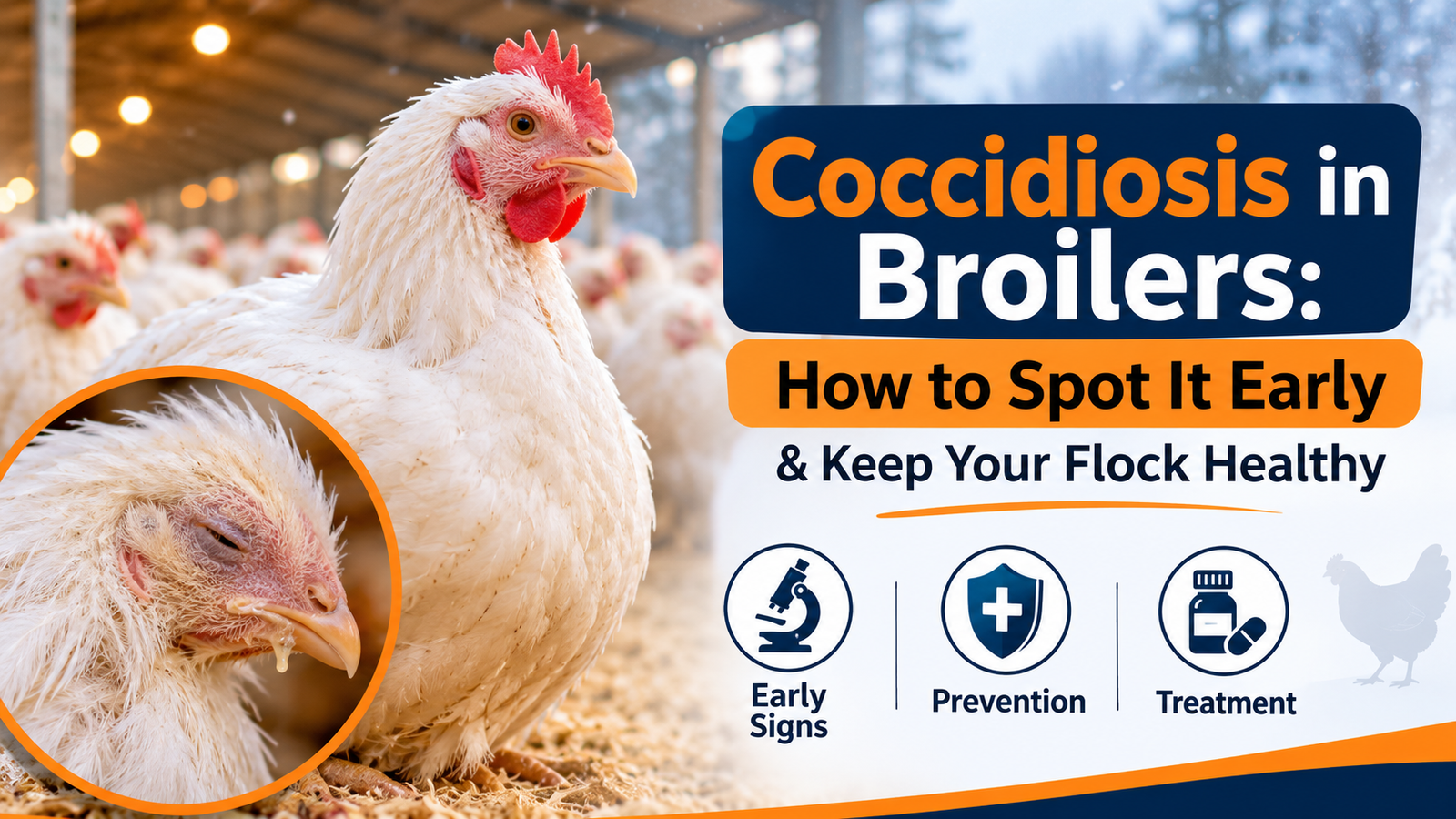
Coccidiosis is one of the most common and costly diseases in broiler farming. Even mild cases, where few birds die, can quietly cut weight gain and feed efficiency across the whole flock. Catching it early makes all the difference.
What causes coccidiosis?
Coccidiosis is caused by tiny parasites called Eimeria. Birds pick them up by pecking at litter contaminated with droppings. The parasites multiply inside the gut wall and damage it, so the bird cannot absorb nutrients properly.
Different species attack different parts of the gut. E. tenella attacks the caeca and causes bloody droppings. E. acervulina and E. maxima damage the small intestine and mainly cause poor growth.
Why winter raises the risk
The parasites thrive in warm, damp litter. In winter, sheds are closed up, condensation forms, and litter around drinkers stays wet. That is the perfect environment for coccidia to build up.
Early signs
Coccidiosis usually appears between 3 and 6 weeks of age. Watch for:
- Droppings that are watery, mucus-filled or blood-stained
- Birds huddling with ruffled feathers and drooping wings
- Pale combs and shanks
- Reduced feed intake and uneven flock weights
- A sudden rise in daily mortality
In mild cases, the only sign may be birds growing slower than expected. Your vet can confirm coccidiosis by examining the gut at post-mortem.
Prevention
- Keep litter dry.This matters more than anything else. Fix leaks, adjust drinker height and replace wet patches.
- Do not overstock.Crowding increases contact with droppings.
- Use an anticoccidial programmein feed or a coccidiosis vaccine, as advised by your vet.
- Clean and disinfect between flocks, and let the shed rest before new chicks arrive.
- Support recovery with vitamins A and K.Vitamin A helps repair the gut lining, and vitamin K helps control bleeding.
Treatment
When an outbreak starts, treat the whole flock quickly through the drinking water. Common treatments include amprolium, toltrazuril and sulfonamide combinations.
Symans anticoccidial products include:
- Amprovil: amprolium, for coccidiosis outbreaks in broilers, layers, breeders, ducks and quails
- Symocox: toltrazuril 25 mg/ml, acts on all intracellular stages of coccidia, both caecal and intestinal
- Coxirid: diaveridine and sulfabenzpyrazine with vitamins A and K3, for treatment and prevention
- SMS-30: sulfaclozine sodium, for coccidiosis in layers and broilers of all ages
- Coxicure-AK: three anticoccidials with vitamins A and K3
Always treat on your vet’s advice, follow the label dose and observe withdrawal periods. Rotate between drug classes over time to reduce the risk of resistance.
The bottom line
Dry litter is your best defence against coccidiosis. Check droppings daily, weigh a sample of birds weekly and act at the first sign of trouble.
See all Symans poultry products or ask our team for help building a prevention plan.